Biogas Upgrading In One Of Denmark's Largest Biogas Plants
High‑Efficiency Biogas Upgrading for Denmark’s Largest Plants – A Clean Energy Success Story
As the transition toward renewable energy accelerates worldwide, operators of large‑scale biogas plants face a crucial challenge: increasing production capacity while improving biomethane quality, reducing energy consumption, and ensuring long‑term operational reliability.
This was exactly the situation faced by one of Denmark’s leading biogas producers, seeking to expand its grid‑injected biomethane capacity with a modern, energy‑efficient compression solution.
The Challenge: Higher Capacity, Better Efficiency, Lower Operating Costs
With growing demand for biomethane, stricter environmental regulations, and a strong commitment to reducing operational emissions, the customer needed a compression system capable of:
- Handling high and continuous biogas flows
- Delivering consistent gas quality for the upgrading stage
- Ensuring 24/7 reliability in an intensive production environment
- Reducing maintenance requirements and total cost of ownership (TCO)
- Integrating seamlessly into an existing process with minimal downtime
The objective was clear: upgrade the core of the compression system to support a larger, more sustainable biomethane production capacity.
High Technical Requirements for a High‑Scale Biomethane Facility
For one of the country’s largest upgrading units, the expected performance levels were particularly demanding:
- Operating pressure: 5 bar(g)
- Flow rate: 2,070 Nm³/h
- Variable frequency drive (VFD) control for energy‑optimized operation
- Full compatibility with dynamic biogas compositions and load variations
Such parameters required a solution that combines robustness, flexibility, and long‑term energy efficiency.
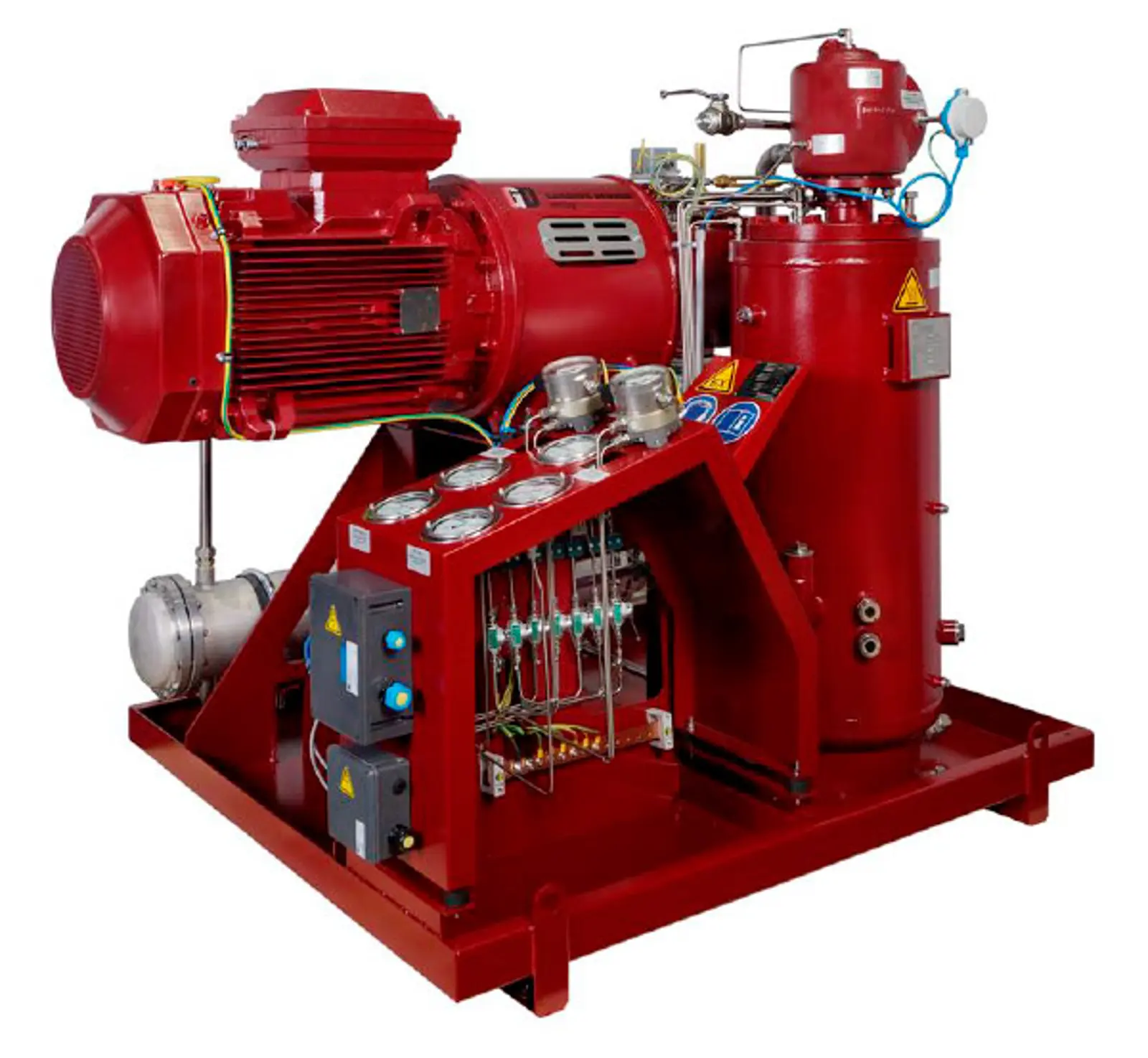
The Solution: 2 × ROW 370 G – Proven Rotary Vane Technology for High‑Performance Biogas Compression
After a comprehensive system analysis, the customer selected two ROW 370 G oil‑injected rotary vane compressors, a technology widely trusted across the biogas upgrading sector, renewable gas applications, and demanding industrial environments.
Key Advantages of the ROW 370 G:
- Stable and consistent flow, even with variations in raw biogas quality
- Extremely robust construction, suitable for corrosive and moisture‑rich environments
- Low leakage rates, reducing gas losses and improving overall efficiency
- Excellent energy performance, especially under VFD operation
- Simple, predictable maintenance, thanks to the proven rotary vane design
- Extended operational lifetime, even under constant, heavy‑duty use
These features make the ROW 370 G an ideal match for high‑capacity biomethane production facilities.
Tangible Benefits for the Customer
The new system immediately enhanced the plant’s overall performance. Key benefits include:
1. Improved Process Stability
The compressors deliver reliable, continuous gas flow, ensuring consistent biomethane quality throughout the upgrading process.
2. Significantly Lower Maintenance Needs
The rotary vane technology minimizes downtime and simplifies service requirements, reducing maintenance budgets.
3. A Lower Total Cost of Ownership (TCO)
Optimized energy consumption combined with long service life results in high long‑term profitability.
4. A Future‑Proof and Scalable Solution
With frequency control, the system adapts easily to changing production volumes without requiring structural modifications.
5. A Direct Contribution to Denmark’s Renewable Energy Goals
By increasing biomethane output, the plant strengthens Denmark’s commitment to a more sustainable, renewable energy mix.
A Flagship Project for the Biogas Sector
Through this modernization initiative, the plant has invested in a compression solution that brings together:
- High performance
- Long‑term durability
- Energy efficiency
- 24/7 reliability
Today, the installation stands as a benchmark project within Denmark’s biogas and biomethane industry, demonstrating how advanced compression technology directly supports the growth of renewable energy.
Application
Biogas upgrading
Requirements
New high efficiency system
Performances
5 bar (g), 2.070 Nm³/h - frequency controlled
Solution
2 x ROW 370 G - Oil injected rotary vane compressor
Customer Benefits
- Reliable system with low maintenace cost
- Low total cost of ownership